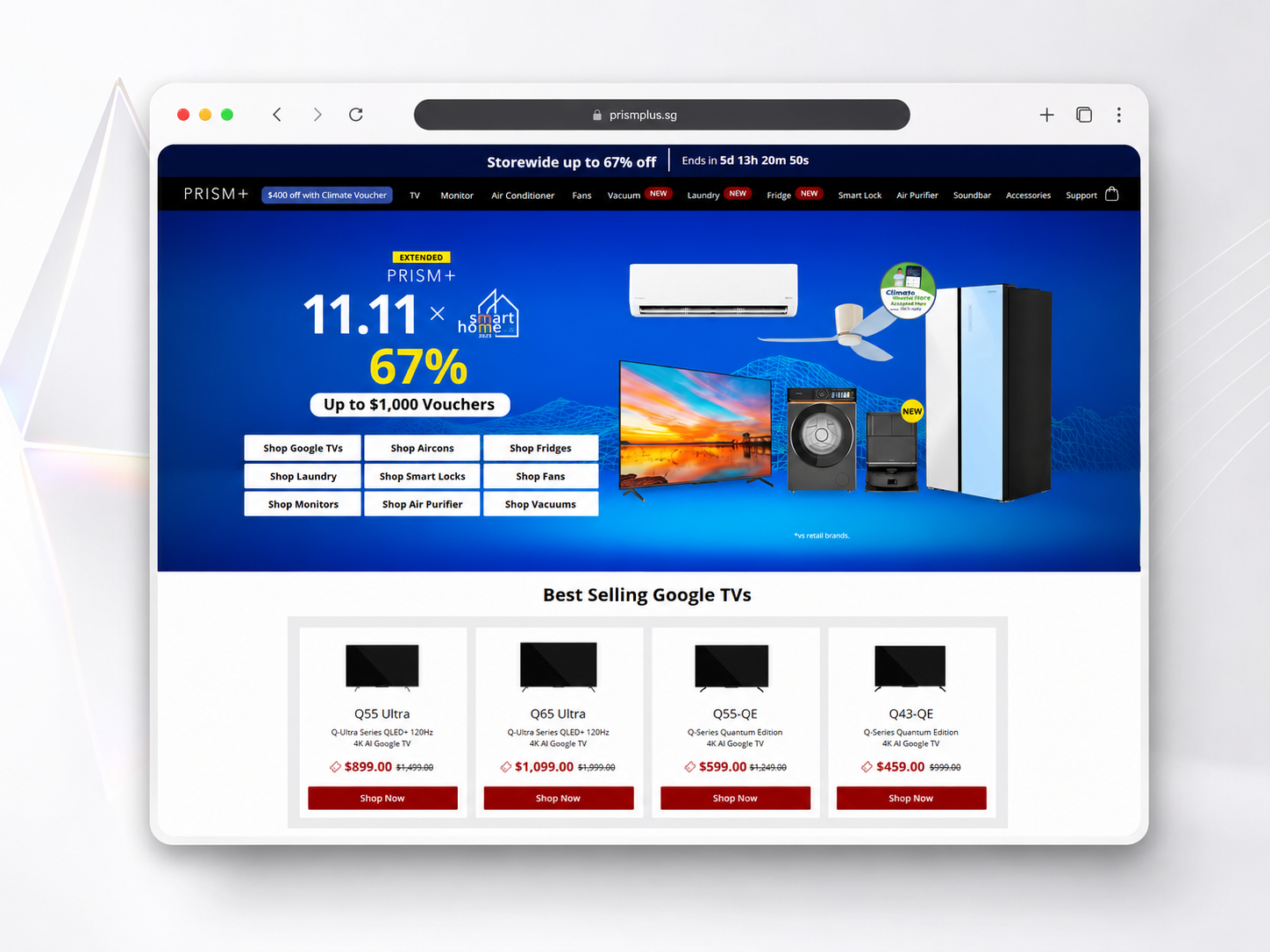
Unmoderated & Moderated Testing
Case study
Published on November, 2023 · 5 min read
As part of the PRISM+ website improvement initiative, I conducted both unmoderated usability testing and moderated UX interviews to uncover user pain points, assess task success, and validate design assumptions. These two research approaches complemented each other.
🧭 Objectives
- Evaluate the current PRISM+ website’s shopping experience and identify usability issues.
- Compare real user behavior (unmoderated) vs. internal stakeholder expectations (moderated).
- Validate task flows, content clarity, and decision points related to key PDP features.
- Build a structured research workflow for future usability testing rounds.
🧱 Methods Used
Unmoderated Usability Testing (General Users)
Purpose: Gather natural, unbiased user behavior on the live PRISM+ site.
Setup:
- Conducted online using an unmoderated testing tool
- Duration: 20–25 minutes per participant
- Participants completed 6 tasks related to browsing, comparing, and purchasing PRISM+ products
- Tasks covered PDP navigation, collection browsing, cart interactions, and promotional understanding
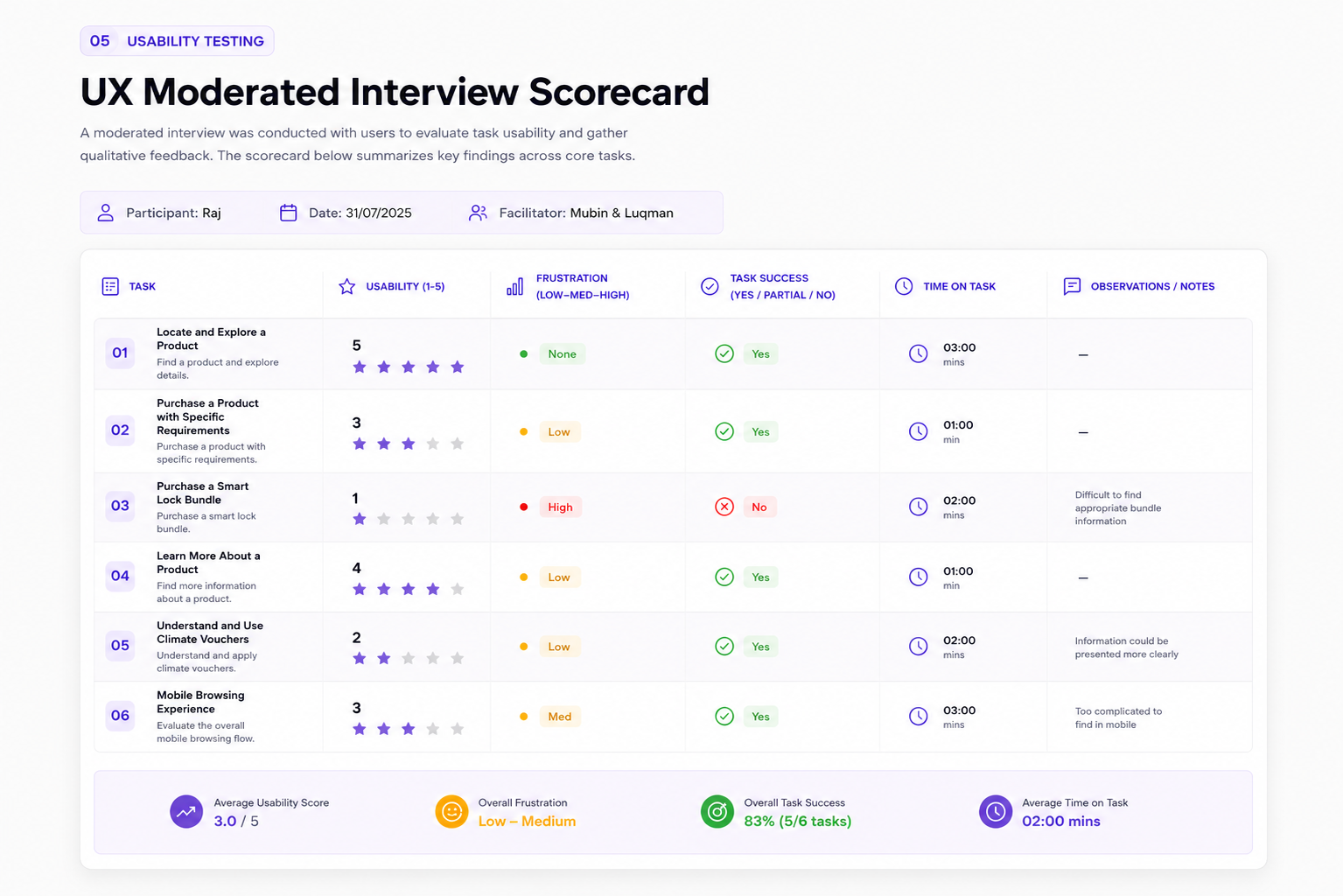
Key Deliverables:
- Task scenarios and success criteria
- User behavior recordings
- A quantitative scorecard for: Task completion, Usability score, Frustration level
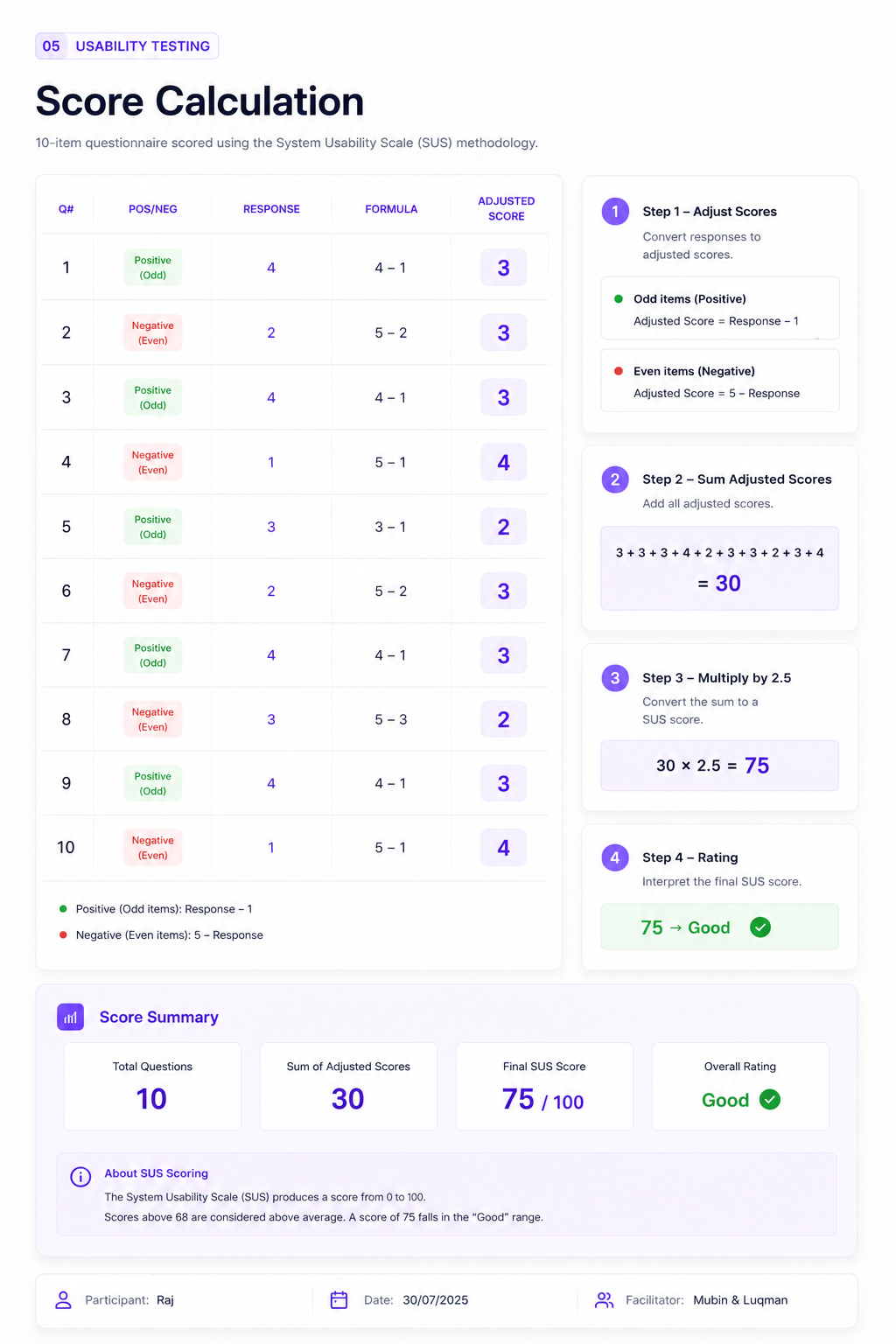
Insights Uncovered:
- Natural friction points in live shopping flows
- Real browsing hierarchy and information-seeking patterns
- Pages where users struggled to make confident decisions
- Input for navigation, PDP improvements, and content clarity
🌍 Moderated Usability Testing (Internal Stakeholders)
Purpose: Deep-dive into usability issues with people who understand the ecosystem—BD, CS, Marketing, Ops, Developers
Setup:
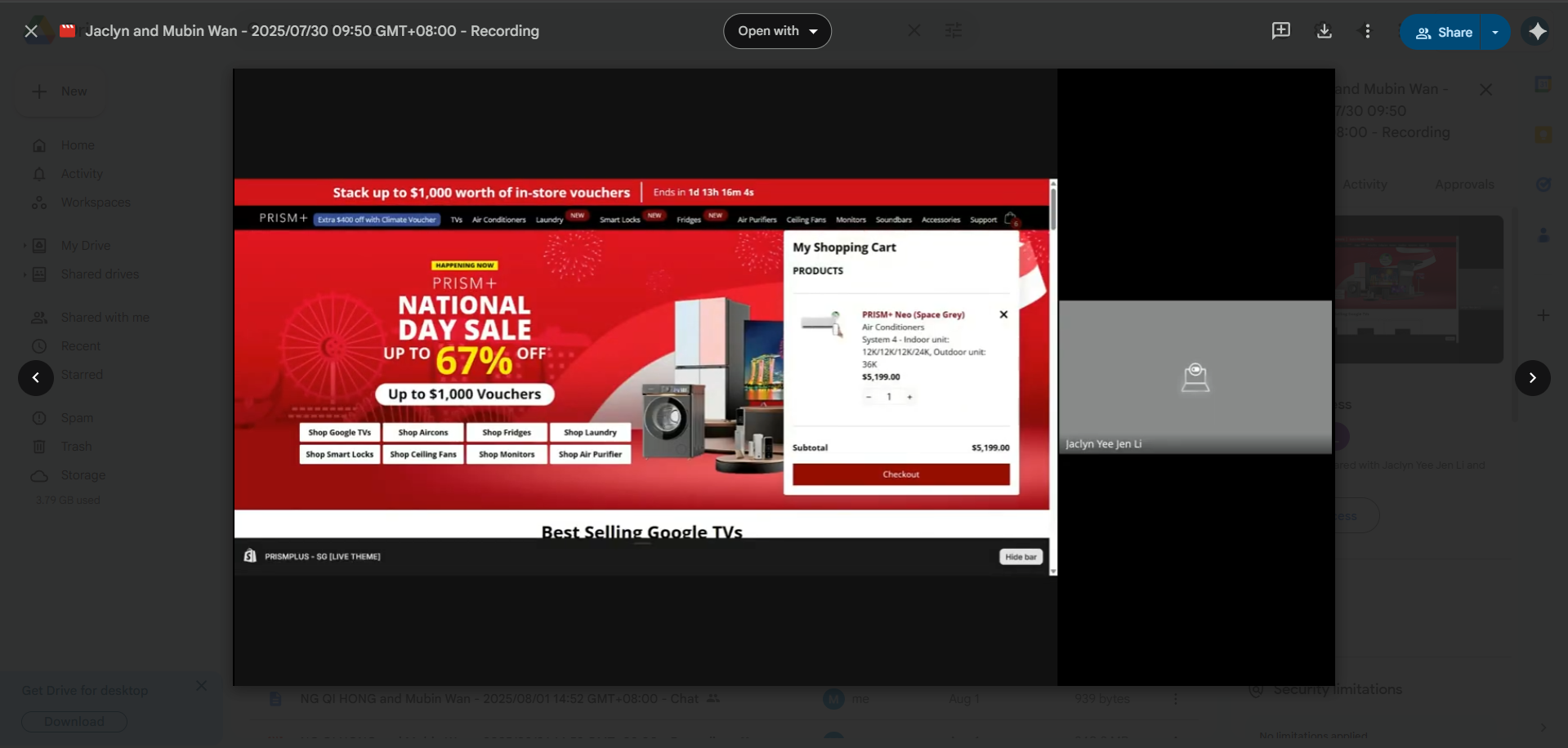
- 1-on-1 interviews conducted via Google Meet
- Duration: 30–60 minutes each
- Booking process handled using Calendly
- Dates scheduled: 28 July – 6 August
- Participants shared screens while performing tasks
Prepared Materials:
- Updated UX Interview Prep Kit (script, structure)
- Refined participant tasks
- Usability scorecard for task success + frustration
- Probing questions tailored to stakeholder-specific insights
Why Moderated?
- Ask “Why?” in real time
- Clarify reasoning behind each decision
- Identify internal expectations vs. actual user behavior
- Gather suggestions from people who understand business constraints
🧠 Analysis: Affinity Mapping & Synthesis
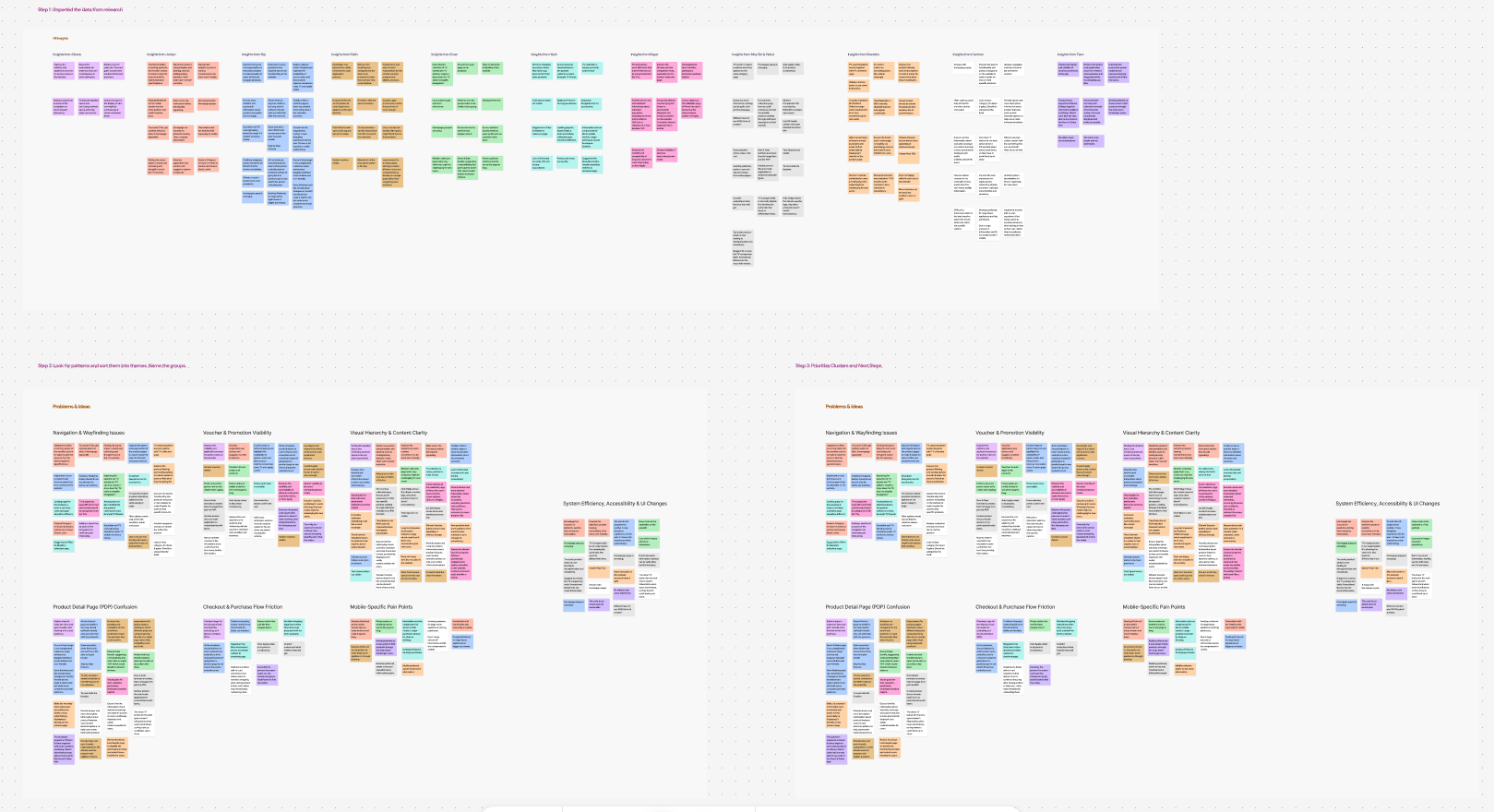
After all moderated sessions, I performed Affinity Mapping to categorize findings across themes:
- Navigation challenges
- PDP clarity issues
- Checkout friction
- Misalignment between business expectations and user behavior
- Content hierarchy gaps
- Visual clutter vs. decision-making
This resulted in clear problem clusters, allowing the team to prioritize fixes. I also documented all interview sessions, including timestamps, pain points, notable quotes, and recommendations.
📊 Key Findings
From Unmoderated Testing:
- Users struggled with inconsistent PDP sections
- Some bundle information was unclear during comparison
- Mobile experience showed gaps due to viewport issues
- Users often missed secondary features like installation, warranty, and specs
From Moderated Interviews:
- Stakeholders highlighted gaps in product differentiation
- Internal teams wanted better clarity for promotions (e.g., Climate Voucher)
- Strong insights on content prioritization and hierarchy
- Identified mismatches between internal assumptions and user expectations
🧩 Key Outcomes
- Updated UX Interview Preparation Kit used as a reusable template for future testing
- Provided consolidated task success scorecard and action-oriented recommendations
- Influenced the design direction for the upcoming PRISM+ website revamp
- Strengthened alignment between actual user behavior and internal expectations
- Provided actionable insights for improving PDP, navigation, filters, and checkout flows
⚙️ Tools Used
- Google Meet
- Calendly
- Testing platform for unmoderated tasks
- Figma (documentation, notes, kit updates)
- Miro / FigJam (affinity mapping)
📌 Reflection
Running both moderated and unmoderated testing was highly valuable:
- Unmoderated testing helped observe unbiased behavior patterns at scale
- Moderated sessions helped uncover context, intent, and nuance
The combination ensured true user behavior was captured while still aligning improvements to business goals.